Heisenberg’s final theory

Last month, I was at Foundations 2018 in Utrecht. It is one of the biggest conferences on the foundations of physics, bringing together physicists, philosophers, and historians of science. A talk I found particularly interesting was that of Alexander Blum, from the Max Planck Institute for the History of Science, entitled Heisenberg’s 1958 Weltformel & the roots of post-empirical physics. Let me briefly summarize Blum’s fascinating story.

In 1958, Werner Heisenberg put forward a new theory of matter that, according to his peers (and to every physicist today) could not possibly be correct, failing to reproduce most known microscopic phenomena. Yet he firmly believed in it, worked on it restlessly (at least for a while), and presented it to the public as a major breakthrough. How was such an embarrassment possible given that Heisenberg was one of the brightest physicists of the time? One could try to find the answer in Heisenberg’s personal shortcomings, in his psychology, in his age, perhaps even in his deluded attempt at making a comeback after the sad episode of his work on the nazi Uranprojekt during World War II. Blum’s point is that the answer lies, rather, in the very peculiar nature of modern physical theories, where mathematical constraints strongly guide theory building.
Continue reading →

Through two doors at once

IMG_1917

Anil Ananthaswamy

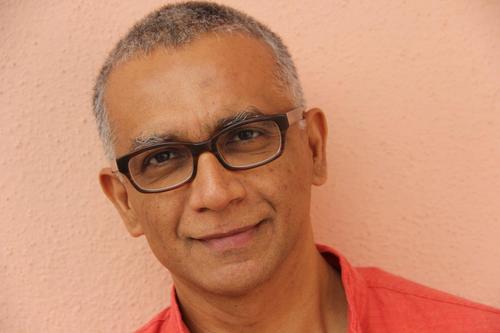
I have really enjoyed Anil Ananthaswamy’s latest book: Through two doors at once: The Elegant Experiment That Captures the Enigma of Our Quantum Reality. It is very well written and one reads through it like a novel. But, most importantly, it gets the physics right, and the subtleties are not washed away with metaphors. Accurate and captivating, the book strikes a balance rarely reached in popular science books.

Continue reading →

Survival bias and the non-empirical confirmation of physical theories

Survival Bias

Survivorship-bias

drawing by McGeddon

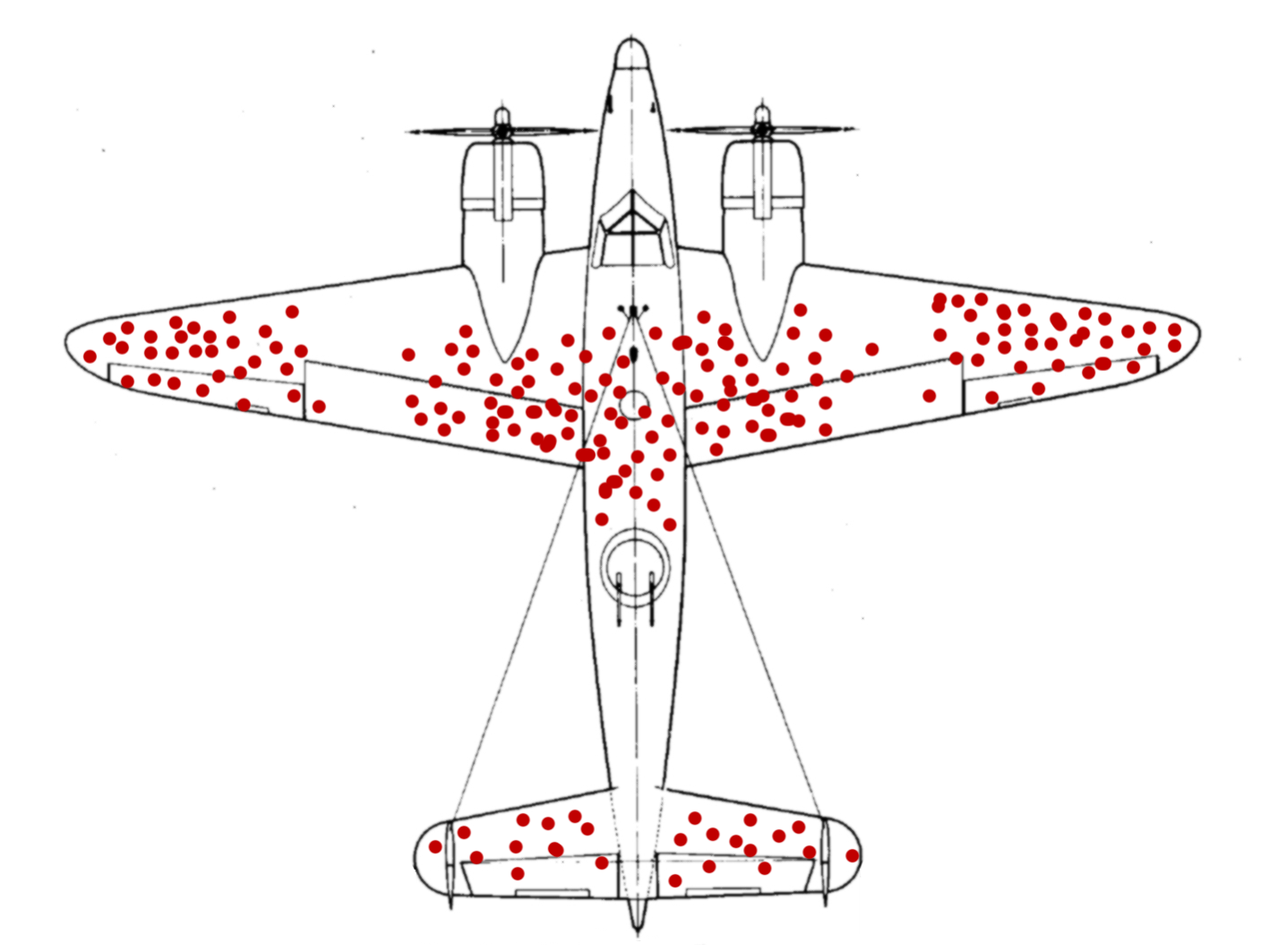
During World War II, the US military did statistics to see where its bombers got primarily damaged. The pattern looked like the picture on the right. The first intuition of the engineers was to reinforce the parts that were hit the most. Abraham Wald, a statistician, realized that the distribution of impacts was observed only for the airplanes that actually came back from combat. Those that were hit somewhere else could probably not even make it back home. Hence it is precisely where the planes seemed to be the least damaged that adding reinforcements was the most useful! This famous story illustrates the problem of survival bias (or survivorship bias).

Continue reading →

Self-promotion

Anil Ananthaswamy has written a very nice piece for New Scientist about semiclassical gravity. It deals with recent attempts (to which I have taken part) in trying to make sense of a theory in which gravity is fundamentally classical.

screennewscientist

The article is a bit too kind and likely gives me a more central place in this adventure than I actually deserve. Nonetheless, the article contains the right amount of qualifiers and lets the skeptics speak. I understand them all too well: our approach is clearly not without flaws. It is more a counterexample to pessimistic views about semiclassical gravity than a believable proposal for a theory of everything. And I would not be surprised if it were to be falsified in the near future. But as Lajos is quoted saying at the end: “we must explore”.

Continue reading →

Spacetime essay

I have finally decided to put on arXiv a slightly remastered version (with figures) of my submission to the Beyond Spacetime essay contest. I have slightly tamed the provocative tone but it remains a bit rough. I still post it because I think it puts together many arguments I often make informally in seminars.

The winning essays took a slightly less head on approach to the subject of the contest, which was “Space and Time After Quantum Gravity”:

Continue reading →

Podcast on quantum mechanics

I have been interviewed by Vincent Debierre (in French) for Liberté Académique.

Dans ce podcast nous parlons principalement de mécanique quantique et un peu de sa popularisation. Si je suis peut-être un peu provocateur dans ma critique des effets de manche de certains physicien, je crois ne pas avoir dit trop de bêtises. Je me suis trompé sur une date : l’axiomatisation de la mécanique quantique due à Von Neumann date de 1932 et non de 1926 (qui correspond à la “première vague”, avec Heisenberg, Born et Jordan, suivie de la formulation de Dirac en 1930).

Continue reading →

Status of the article pipeline

Ideas have a long way to go before they become articles. Usually for me the first step is to write down the computations and main arguments on paper. Then I write down a better typeset draft and iterate on it until it looks like a decent preprint. I then put it on arXiv, hoping to gather some feedback. Then I further iterate on the draft, rewrite things, correct mistakes, and send it to a first journal. The first journal typically rejects it but hopefully I get constructive reports. So I go to a second journal or a third and an article usually quite different from the original idea gets published. In the process, my ego gets shattered but the article becomes, I think, substantially better. This process is very long and so many articles are at different stages in the “pipeline” at the same time. This week and the last, I have made a little bit of progress emptying the pipeline.

Continue reading →

Random news

  • An interesting experimental proposal to finally pin down the quantum (or classical) character of gravity has just been accepted in Physical Review Letters (arxiv). I really think it is far more urgent to explore (theoretically and experimentally) whether gravity really has to be quantized, than to head on brute force quantize everything. Hence I am very sympathetic to this proposal by Sougato Bose and his collaborators (I had heard of it already a year ago in Bangalore). Anil Ananthaswamy has written a popular summary of the article for New Scientist and I am quoted (together with Maaneli Derahkshani) saying all the good that I think of such attempts.
  • I have written a comment (arxiv) to correct some technical mistakes made in a couple of papers on collapse models. The trouble in the original articles came from slightly too brutal perturbative expansions of stochastic differential equations. I have tried to show different ways one could have obtained the correct results and explained what I think went wrong in the original derivations. The bottom line is that to compute the empirical predictions of all “standard” collapse models, it is never necessary to consider the full stochastic differential equation. The average of the solutions, which obeys a simpler linear master equation with smooth solutions, is always sufficient. This is really not a big deal, but perhaps this will simplify the life of people who want to make computations with such models.

Breaking 3h

On Saturday May 6th, on the Monza formula 1 track in Italy, three world class marathoners (Eliud Kipchoge, Zersenay Tadese, and Lelisa Desisa), helped by a team of Nike physiologists and bio-mechanics engineers, attempted to break the 2h barrier on marathon. Eliud Kipchoge came the closest with a breathtakingly fast 2h00'25" setting an unofficial world record (smashing the official record of Denis Kimetto by 2 minutes). A beautiful 1h documentary by National Geographic has been made on this attempt and on the 6 months preceding it. It is a beautiful ode to running, replacing the Chariots of Fire in my Pantheon of running movies.

Continue reading →

The risk of false positives in epidemiology

Recently, a study carried out partly by INSERM researchers on endocrine disruptors has been discussed quite a lot in French mainstream medias (see for example in le Monde, France Inter, le Point, le Parisien, Libération). The conclusion of the study is allegedly the following: young kids whose mother has been exposed to certain phenols and phtalates have an increased risk to develop behavioral disorders (such as hyperactivity). Such a conclusion, if it were really robustly supported by the study, would no doubt deserve a wide coverage. Unfortunately (or fortunately) that does not seem to be the case. After reading the study, it seems to me that if an adverse effect exists, it is sufficiently small to be statistically insignificant on a sample of more than 500 people.

Continue reading →